Being a successful CEO isn’t just about having a strong vision or making bold decisions; it’s about developing one essential skill that influences how you lead people, respond to challenges, and steer the company forward. This skill shapes company culture, strengthens decision-making, and helps leaders stay grounded while navigating growth, pressure, and change. When mastered, it becomes the backbone of long-term leadership success.
26 Entrepreneurs share the one essential skill every CEO must develop to lead with impact
We asked founders, CEOs, and leadership experts to share the one skill they believe is critical for every chief executive to cultivate, and how it has impacted their leadership journey. From building trust and clarity to driving alignment and resilience, here’s what they shared:
1. Systemized leadership

The most essential skill every CEO must develop is knowing the difference between high-stakes work and busy work. Too many leaders get trapped in the day-to-day grind while the truly important work that moves the business forward gets pushed aside. Real leadership means protecting your time for the decisions that actually matter: strategy, vision, and big moves. Great CEOs systemize everything. Systems create consistency, quality, predictability, and scale. Finally, hire for cultural fit, not just skills. Being a CEO isn’t about working harder; it’s about leading smarter.
Thanks to Adaku Mbagwu, HEAL!
2. Flexibility

In my experience leading Corcava, a SaaS platform that helps businesses unify processes from sales to project management, the most essential skill a CEO must develop is the ability to balance autonomy and structure. Leaders who empower teams with flexibility while keeping strategic alignment can unlock creativity, drive engagement, and accelerate growth. Implementing a unified dashboard gave teams autonomy over marketing campaigns and project workflows, boosting task completion by 30% and engagement. Structured flexibility separates high-performing leaders.


Thanks to Gregory Shein, Corcava!
3. CEO voice that builds trust

Voice is an essential skill every CEO must develop because leadership is felt as much as it is heard. It’s not just what you say, it’s how you say it, the tone you set, the clarity you bring, and the presence you hold when the pressure is on. A CEO’s voice signals confidence, credibility, and direction long before the content is fully processed and lingers long after they've stopped speaking – that's their voiceprint. When your voice is grounded, intentional, and aligned with your message, people don’t just hear you, they trust you, follow you, and act.
Thanks to Sally Prosser
4. Resilience

The most essential skill every CEO must develop is resilience. The ability to look critically at setbacks, find opportunities, adapt quickly, and keep moving forward without losing sight of your vision. In medical tourism, I navigate constantly shifting variables: international regulations, currency fluctuations, client expectations, and the unpredictability of coordinating care across borders. There’s no playbook for when a flight gets cancelled, a procedure timeline shifts, or a client panics mid-journey. What separates CEOs who thrive from those who burn out is the capacity to treat obstacles as information rather than defeat.
Thanks to Sarah Hien Tran, Glamjet!
5. Future-focused vision
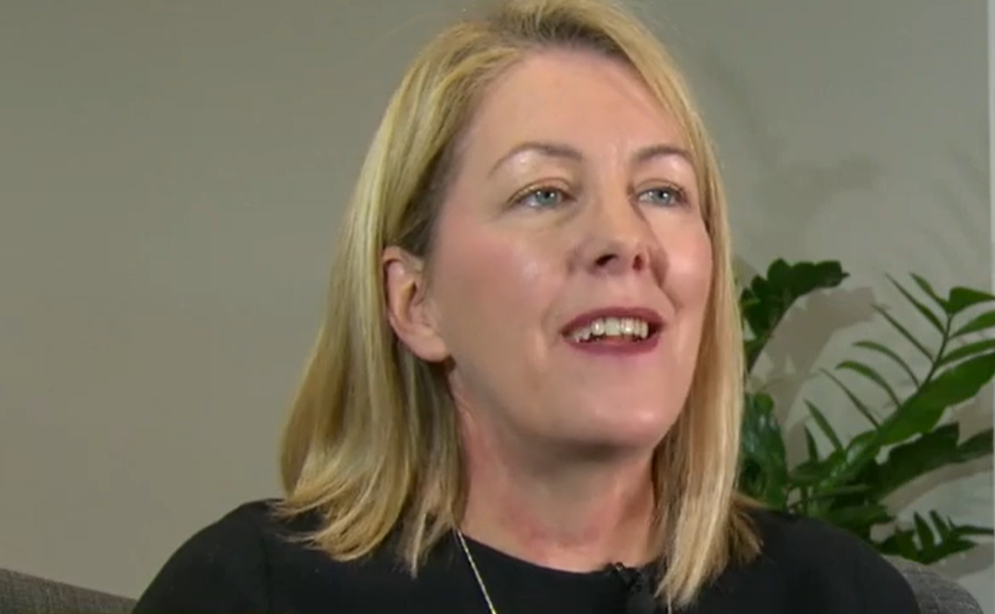
It is easy to want to control every lever in your business, especially if you are a founder/CEO. As a past CEO and current founder, I know your business is personal. But the most essential skill every CEO needs is to focus on the future of the business, designing and effectively communicating their vision for growth and sustainability. Being an architect involves looking outward at trends, new technology, and seeking the best people to get the job done. Don’t get stuck in the weeds.

Thanks to Megan Doyle, Tic Tac Toe Consulting!
6. Clear communication

The essential skill every CEO must develop is clear communication, because without it, strategy, culture, and execution fall apart. Communication works when supported by emotional intelligence (EQ) and balanced with intellectual intelligence (IQ), so logic and problem-solving aren’t overridden by emotion. Where most CEOs struggle isn’t a lack of ideas, but clarity and self-regulation. Equally important is consistent introspection. Strong CEOs review decisions and blind spots. A final piece is ego awareness. Ego isn’t the enemy; unmanaged ego is.
Thanks to Mick Owar, Primal Recovery!
7. Healthy empathy

Every CEO must develop the skill of healthy empathy, the ability to understand how their own brain works, how it shapes their reactions, and how it influences the way they connect with others. It’s not enough to “be empathetic”; leaders need to understand and practice empathy in a healthy way that builds trust, collaboration, and engagement, while protecting their own boundaries. By combining self-awareness with genuine connection, CEOs can listen deeply, respond thoughtfully, and build strong teams, turning empathy into sustainable leadership rather than burnout.
Thanks to Leanne Butterworth, Empathy First!
8. Ethical leadership and emotional resilience

One of the most essential skills every CEO must develop is the ability to carry responsibility without absorbing unsustainable emotional and ethical load, particularly in 2026. In values-led and advocacy-adjacent leadership, burnout rarely comes from the workload alone. It comes from constantly holding complexity, people’s expectations, and moral responsibility without adequate structures or boundaries. Modern CEOs must understand influence as a duty, not a pressure point. They need to learn how to lead with discernment rather than constant urgency.
Thanks to Sarah Cassim
9. Translating vision into scalable systems

One of the most essential skills every CEO must develop is the ability to translate vision into executable systems. Strategy without structure creates burnout, not scale. A strong CEO learns how to delegate authority without losing governance, make decisions with incomplete information, and regulate their own nervous system under pressure. As businesses grow, leadership becomes less about personal brilliance and more about designing environments where others can perform at their best. The CEOs who thrive long-term are those who can balance commercial discipline.
Thanks to Joanna Zhang, The Operations Genius!
10. Emotional regulation skills

The most critical skill a CEO must develop is emotional regulation under pressure. Companies don’t experience stress; leaders do, and whatever state a CEO operates from eventually cascades through the organisation. I’ve seen strong strategies fail simply because leaders reacted instead of responding. CEOs who learn to slow themselves down, stay grounded during uncertainty, and separate emotion from execution make better long-term decisions and build more resilient teams. Calm isn’t passive; it’s a competitive advantage.
Thanks to Deepak Shukla, Pearl Lemon!
11. Decision-making with emotional intelligence

One essential skill every CEO must develop is decision-making with emotional intelligence. In the early stages of building a business, especially a consumer brand, you’re constantly balancing data with instinct: numbers tell one story, but your customers’ lived experiences tell another. The strongest CEOs learn how to listen deeply, filter noise, and make clear decisions even when information is imperfect. That includes knowing when to move fast, when to pause, and when to say no to opportunities, partners, or growth paths that don’t align with your values.
Thanks to Samira Benarif, Athletiktween!
12. Prioritization

The most essential skill every CEO must develop is prioritization with teeth. Most CEOs can see opportunities, but very few can say no fast enough. I see founders drowning in tools, tactics, and ideas, mistaking motion for progress. The real skill is deciding what not to do and aligning the entire company around a single outcome that moves the business forward. This became obvious in a project where a business went from zero to $20K in monthly revenue by cutting initiatives and protecting focus.
Thanks to Alejandro Meyerhans, Get Me Links!
13. Vision

One strategy every CEO should have is vision. Business owners must look beyond daily activities to map the company’s future, identifying market opportunities, anticipating industry changes, and equipping the organization for sustainable success. Strategic thinking balances long-term objectives with short-term needs and communicates a clear vision that inspires stakeholders. CEOs review trends, debate opinions, and plan scenarios. This vision enables rapid, necessary changes, ensuring continuous progress toward primary objectives.
Thanks to Richard Mews, Sell With Richard!
14. Ability to coach and empower

One of the most important skills CEOs need today is the ability to coach and empower rather than control. Instead of directing every move, effective leaders focus on outcomes and create greater autonomy and flexibility in how work gets done. They are also more open about the big problems they want to solve and the opportunities they want to create, recognising that great ideas can come from anywhere. That’s when discretionary effort lifts, potential is unlocked, and organisations become magnets for great talent. Innovation improves too, because the next breakthrough rarely comes from the top alone.
Thanks to Cherie Mylordis, Nextgenify!
15. Clarity and conviction in decisions

In my experience, the most essential skill every CEO must develop is decision-making with clarity and conviction. Not speed, not hustle, but the ability to make aligned decisions without overthinking, outsourcing authority, or waiting for certainty. CEOs are constantly faced with incomplete information, competing priorities, and pressure from multiple directions. The leaders who scale sustainably are the ones who can assess risk, trust their judgment, and commit to a direction without spiralling into doubt. Strong decision-making creates and prevents burnout. Without it, even the best strategy stalls.
Thanks to Sasha Eburne
16. Ability to communicate effectively

One skill I believe every CEO must master is the ability to communicate effectively across all levels—whether it’s with your team, your customers, or your stakeholders. Clarity, strong and honest communication create a feeling of trust and alignment, which is the key to driving any vision. But it is not only what you say, but it is also about listening. By actively listening to the feedback and by experiencing what the other people want, you will be able to make a better decision, and it is also a sign of respect. When a CEO expresses his/her thoughts effectively and encourages free communication, it is the culture of innovation and cooperation that leads to success.
Thanks to David Ratmoko, Metro Models!
17. Judgment under pressure
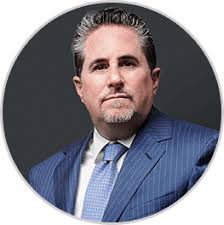
As the managing partner of The Law Offices of Jonathan F. Marshall, I have learned that the most important skill a CEO can develop is judgment under pressure. Decisions happen fast, with real consequences, and that pressure mirrors what leaders face in business. You must listen carefully, filter noise, read people, and make clear calls. Communication is critical so clients and staff understand your direction. A CEO also needs resilience and genuine empathy. Those skills shape how I run my firm and serve clients across New Jersey.
Thanks to Jonathan F. Marshall, The Law Offices of Jonathan F. Marshall!
18. Ability to stay calm and decisive

The most important skill I have developed as a CEO is the ability to stay calm and decisive when emotions run high. People need leadership that feels steady. Listening without absorbing chaos is a discipline that allows clear strategic decisions. I learned to communicate hard truths with empathy, because clarity without compassion feels harsh. Another essential skill is setting a standard for how people are treated. Culture starts with the CEO. That responsibility requires emotional intelligence, strategic thinking, and confidence to lead without hesitation.
Thanks to Charlotte Christian, Summit Family Law!
19. Decision-making and communication

The ability to build and trust a team. I learned this lesson early when my individual sales volume got so high that I couldn't serve every client the way they deserved. Forming my team was about recognizing that nobody succeeds alone in this business, or any business. Every property transaction involves buyers, sellers, agents, coordinators, and support staff working in sync. When you create a culture where everyone knows their role matters, that's when you go from closing properties to building something lasting.
Thanks to Jimmy Welch
20. Turning vision into execution

A CEO must balance vision with execution. I’ve learned that having a great idea is only the starting point. Bringing that idea to life through employee rewards and customer rebate programs takes careful planning, clear communication, and consistent follow-through. It’s about designing systems that genuinely motivate people, whether it’s a team member going the extra mile or a customer choosing your brand over others. Execution means understanding what drives behavior, setting measurable goals, and adjusting as you go to ensure the programs deliver real impact.
Thanks to Ben Wieder, Level 6 Incentives!
21. Adaptability

I’ve learned that adaptability is one of the most important skills any CEO can develop. Leading Air Temp Solutions, I see daily how home maintenance requires flexibility when weather conditions change, equipment ages unexpectedly, or customer needs shift at a moment’s notice. A strong CEO adjusts plans without losing focus, communicates clearly with the team, and ensures everyone understands their priorities. By staying calm and responsive, I can guide technicians effectively, keep operations running smoothly, and provide plumbing services they can trust throughout the year.
Thanks to John Gabrielli, Air Temp Solutions!
22. Two Skills

Inspirational and motivational skills of a CEO towards the team are one of the most necessary skills that he or she has to be able to develop. The vision of a CEO and leadership creates a large footprint in the whole organization, and the culture of enthusiasm and purpose is important in achievement. Begin with honesty and candor. Employees would want to feel that they are part of a machine and not a cog. Describe your vision of the company and the role that each of the team members is assuming in the process. This will generate ownership and purpose in your team.
Thanks to Dr. Roxanne Kemp, AMBCI!
23. Emotional awareness

CEOs should have emotional intelligence. The ability to lead people involves emotional awareness- yours or the other person. Highly emotionally intelligent CEOs have strong teams. They address conflicts effectively and bring about good working cultures. This is the ability to gain self-awareness relating to how your emotions influence decisions; self-regulation, such as staying calm in the face of pressure; empathy, or being aware of stakeholder viewpoints; and social skills as to how to establish meaningful relationships. CEOs with emotional intelligence attract and retain the best employees.
Thanks to Dean Rotchin, Blackjet!
24. Financial literacy

An essential skill every CEO should develop is financial knowledge. Being aware of financial statements, cash flow, and critical metrics will assist all people in making improved decisions. CEOs should read balance sheets, profit and loss statements, and cash flow reports. This aids them in determining the healthiness of the organization. The information informs the strategic investment, pricing, and cost management initiatives. Financial literacy is not simple. It is the understanding of the implications of business decisions on profits and shareholder value.
Thanks to Justin Crabbe, Jettly!